

Principal Áine Best reflects on what sixty years in Andersonstown have meant, and what the College carries into the next sixty.
When De La Salle College opened in Andersonstown on 5 September 1966, it took in 275 pupils. It was a new school built for a fast-growing community, and the community had helped build it.
“Local parishes and families had helped make it possible,” says Áine Best, Principal, “so from the beginning there was a real sense that the school belonged to the community.”
Sixty years on, she describes a shift from a school the community made to a school woven into the community’s story. Generations have passed through the gates and gone out into work, trades, professions, families, sport, culture and public service. “Many of the young people we teach today have fathers and grandfathers who sat in the same classrooms.”
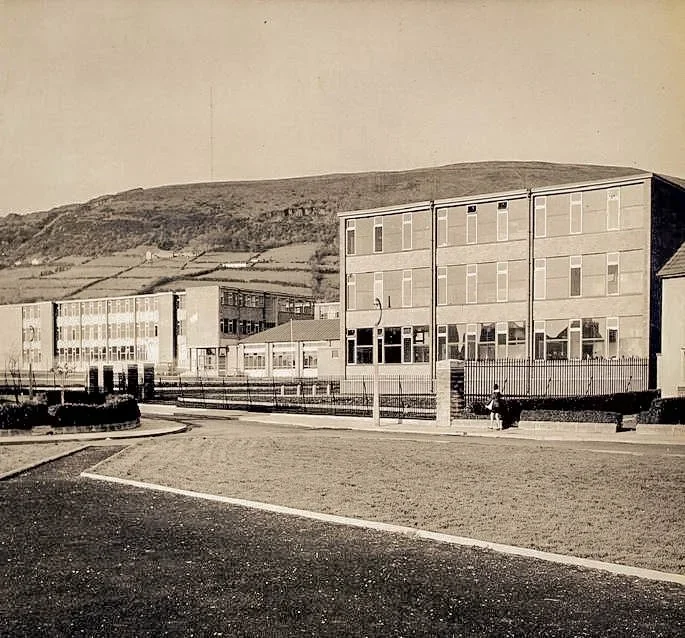
Photo courtesy: www.delasallecollege.org.uk
That closeness has meant sharing the hardest chapters as well as the proudest ones. In 1969 the College provided refuge for families displaced by violence on the Lower Falls. “That history gives us a strong sense both of where we have come from and of our continuing responsibility to the community around us.”
West Belfast has changed enormously in sixty years, and so has the College. What has not changed, she says, is the conviction underneath it.
“We are proudly inclusive and non-selective. Our job is to recognise the potential in every young person and help them discover where their own journey might take them.”
It is the thinking behind the College’s tagline, “A Place of Opportunity: Where Every Journey Matters.”
Custodians, not owners
Leading a school through an anniversary year brings a particular awareness of everyone who is not in the building.
“We are custodians of something that belongs to far more people than those of us currently in the building,” she says. “De La Salle has been shaped by sixty years of Brothers, staff, pupils, families and friends of the College. Each generation has added something to the school we have inherited.”
The task, as she sees it, is not preservation. “It is to understand what was important about it and make sure we carry that forward.” For her, that is the Lasallian conviction of the dignity and worth of every young person, “particularly those who most need someone to believe in them.”
Buildings change and the educational landscape changes, but the mission holds. “Schools have to evolve because the needs of young people evolve too. As we look towards the next sixty years, I want us to be ambitious enough to change where change is needed, but grounded enough never to lose sight of why we are here.”
Her measure of success is plain. “If the next generation can say that they were known, valued, supported and given opportunities at De La Salle, then I think we will have carried that legacy forward well.”
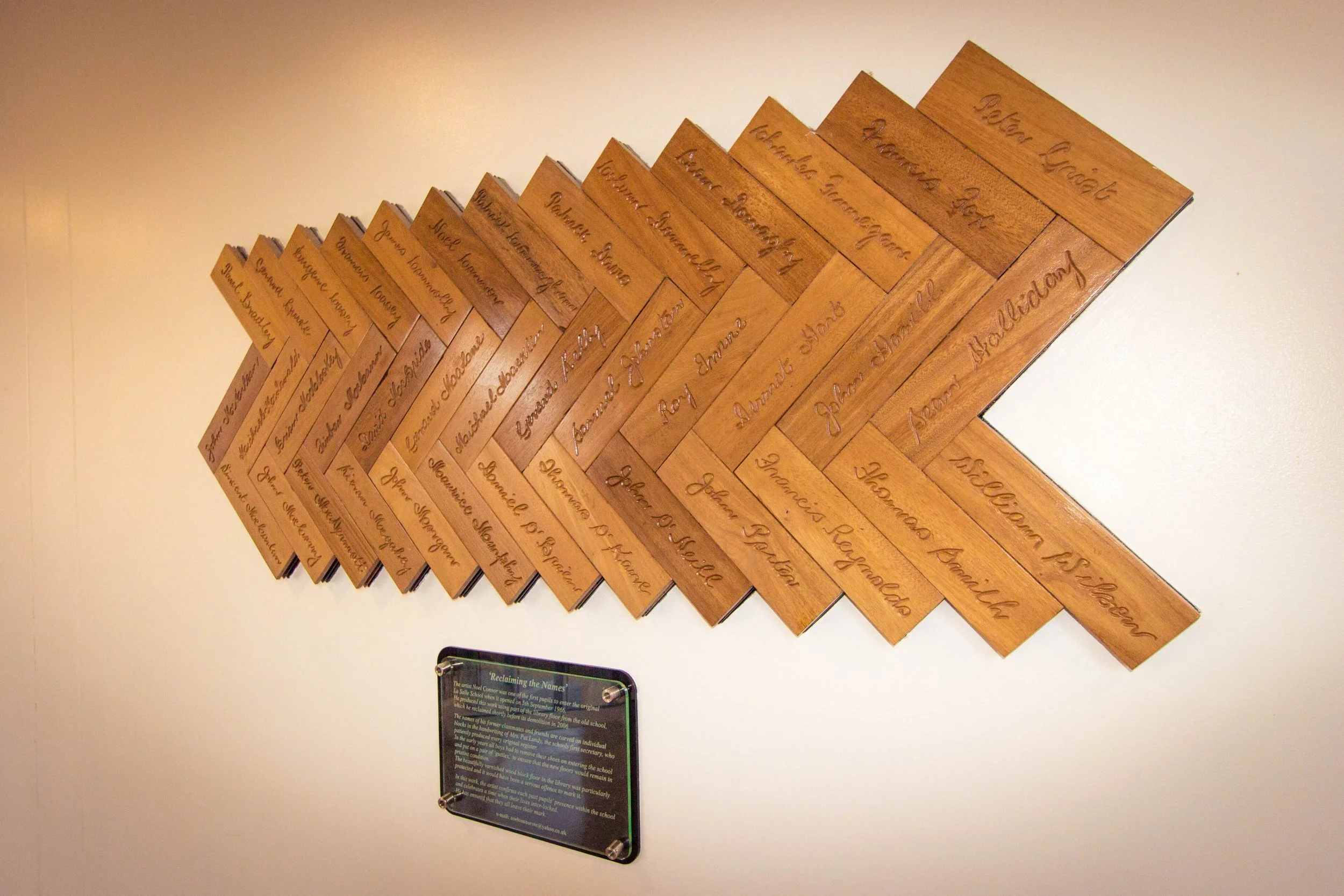
Reclaiming the Names is a site-specific wooden sculpture created by artist and poet Noel Connor for the new De La Salle College building in Belfast in 2007/2008. Installed right outside the new school library, the piece preserves the memory of the original 1966 school cohort using salvaged materials from the old building
What this year’s leavers take
Qualifications and skills matter, she says, but she hopes this year’s leavers take something underneath them.
“I hope every young person leaves knowing that where they begin does not have to determine where they finish. There is no single definition of success and no single journey that a De La Salle pupil is expected to follow.”
Marking sixty years has brought that home. Past pupils have taken paths that no exam result predicted, and their contribution cannot be measured in job titles.
“Most of all, I hope they understand that being Lasallian does not end when they walk through our gates for the final time. Faith, service, community and respect remain at the heart of the College’s Lasallian identity. I hope those values travel with them into their families, workplaces and communities, wherever their particular journey takes them.”
The Diamond Jubilee year is built around that span of people rather than the building itself. The College is reconnecting with past pupils and staff, marking what they have contributed to West Belfast and well beyond it, and giving today’s pupils a sense that they belong to a story that began long before them.
“Our history matters because it gives us strong foundations,” she says, “but our focus remains firmly on the young people in our classrooms today, and ensuring that De La Salle continues to be a place of opportunity for the generations still to come.”
With special thanks to Áine Best, Principal, De La Salle College, Belfast.
Photos Courtesy: Áine Best and De La Salle College, Belfast website.